Strengthening Rwanda's Response to Non-communicable Diseases: Building Resilient Health Systems for Integrated NCD Care
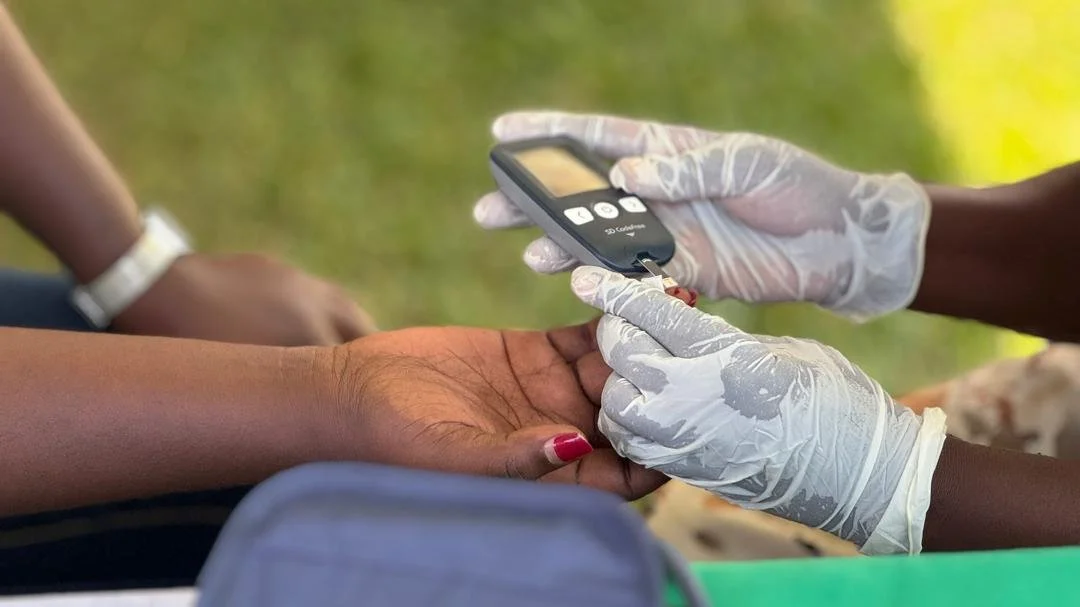
Non-communicable diseases (NCDs), including cardiovascular diseases, diabetes, and cancer, have become the leading causes of death in Rwanda. As people live longer and lifestyles continue to change, the risk and burden of noncommunicable diseases such as hypertension and diabetes are increasing, making prevention and early detection more important than ever.
Unlike acute illnesses, most NCDs are asymptomatic and their diagnosis requires regular medical check-up or screening, and their treatment involves lifelong medications and accompaniment.
People with uncontrolled hypertension face a significantly higher risk of serious conditions, such as stroke or heart attack that can cost a family their livelihood and savings. In rural Rwanda, where access to emergency care is limited, the cost of inaction is measured in lives lost and communities weakened.
That is where Health Builders' work begins.
Health Builders works closely with the Rwandan Ministry of Health and global partners to address these health challenges. We also collaborate with district health units, health facilities, and community leaders to ensure every intervention aligns with Rwanda's national health strategy and meets the unique needs of each community. Collaboration is what ensures our work is sustainable for generations to come. Rather than creating parallel programs, we strengthen existing public health services so they can better prevent, detect, and manage chronic diseases within the communities they already serve.
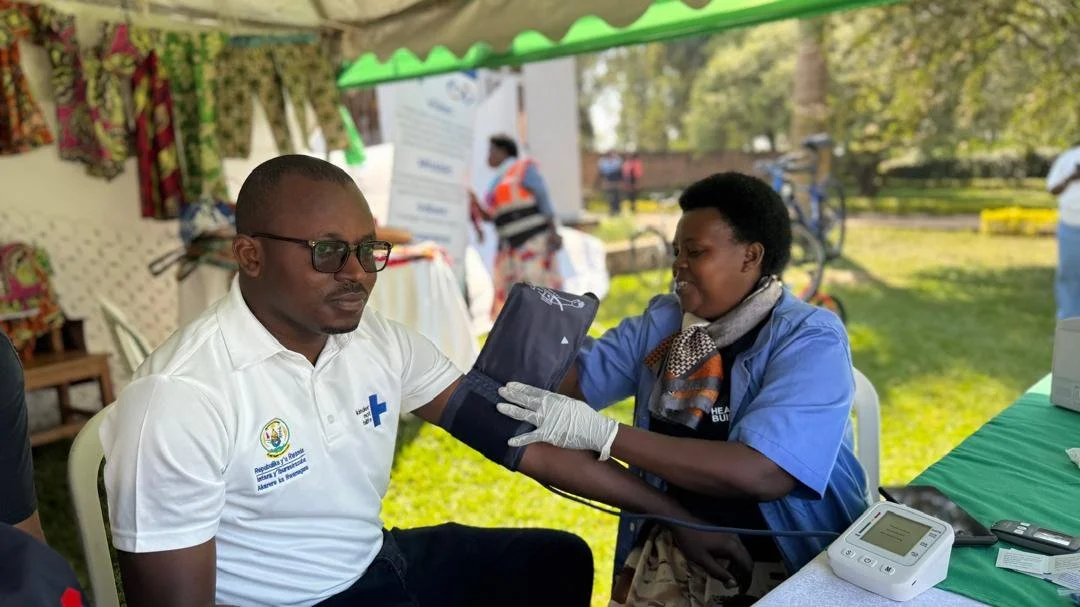
A community Health Worker screening a patient
By supporting community health workers with screenings for high-risk individuals, our teams are helping identify people with high blood pressure and/or high blood sugar to start treatments before complications develop. We also are equipping healthcare providers with the skills and tools needed to deliver quality care, strengthening digital systems that improve patient follow-up, and working with government partners to ensure these improvements can be sustained over the long term.
This approach is supported by partners like Sanofi Global Health which funded the program in Nyabihu District, and Novartis funding it in Rwamagana, Bugesera and Kicukiro.
The Impact Is Already Becoming Evident
To date, Health Builders has:
Trained more than 8,000 community health workers on hypertension and diabetes screening and reporting through the Community Electronic Medical Records (CEMR) system
Distributed 1,861 screening kits, one for every village in our target districts, including BP machines, glucometers, weighing scales, and height boards
Educated more than 1.5 million people on NCD prevention and the importance of early detection
Community health workers supported through Health Builders' digital health initiatives have conducted more than 300,000 screenings for hypertension and diabetes across the four districts where we work.
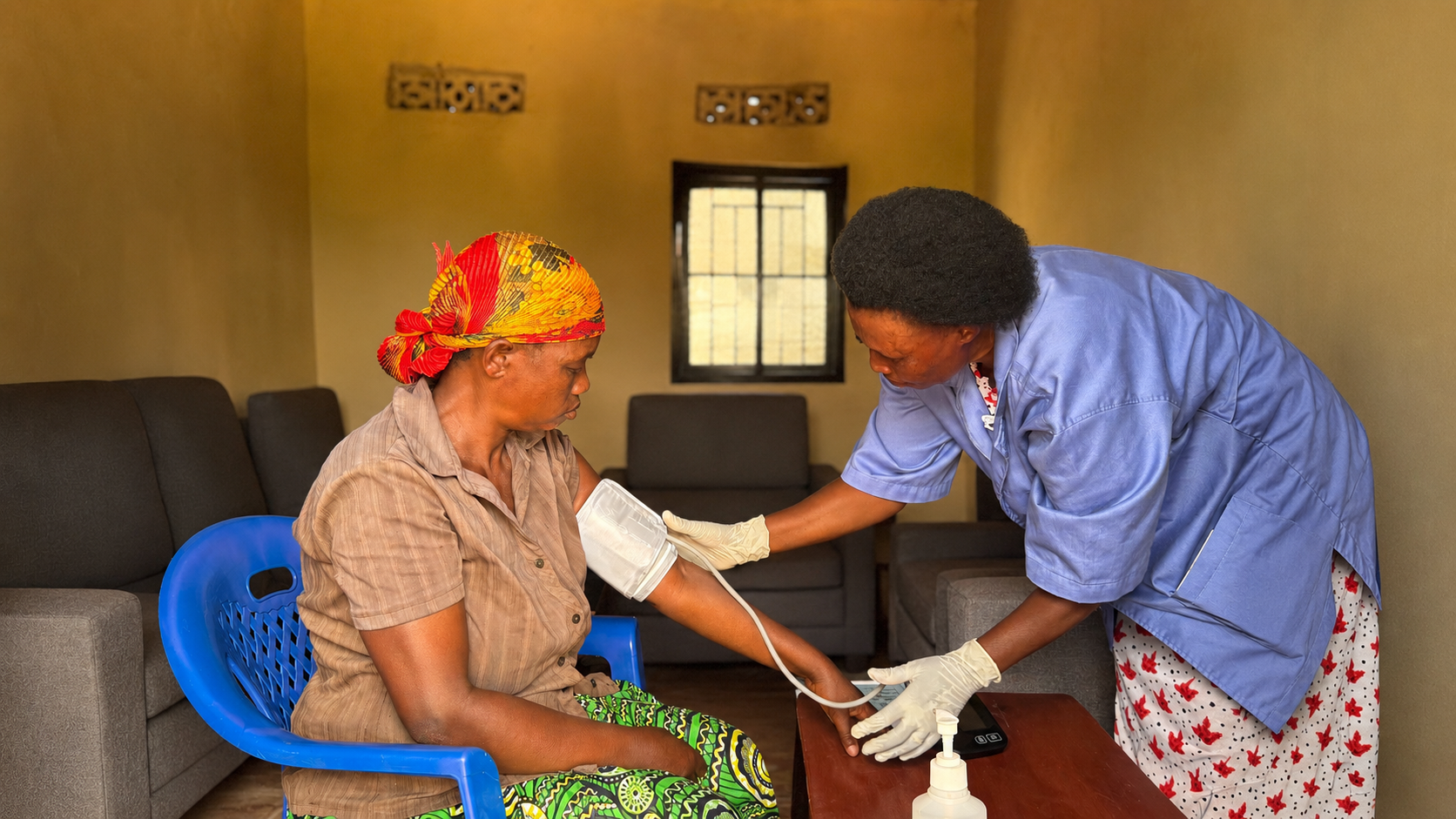
A Community Health Worker screening a patient
Among those screened, they identified:
More than 45,000 new cases of hypertension
More than 9,000 new cases of diabetes
As a result, 37,000 hypertension patients and 9,000 diabetes patients were successfully referred to ongoing care, ensuring they didn't fall through the cracks after diagnosis.
A Life Saved: Innocent's Story
Take Innocent Kabera, a 68-year-old farmer from Nyabihu District. During a routine house-to-house screening, a community health worker discovered his blood pressure was dangerously high. He was immediately referred to his local health center, then to a district hospital, and finally to a teaching hospital in Kigali, where doctors confirmed he was showing early warning signs of a stroke.
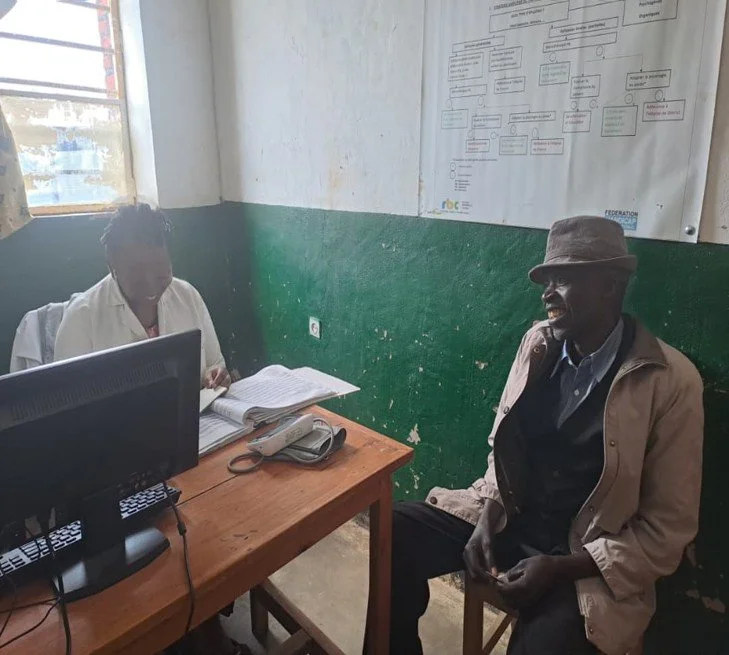
Thanks to that timely screening and referral chain, Innocent received life-saving surgery. Today, he is recovering well and continues to manage his condition at his nearest health center.
"I am grateful for the training and equipment given to our community health workers," Innocent says.
"Without that visit, I might not be here today."
Outperforming National Averages
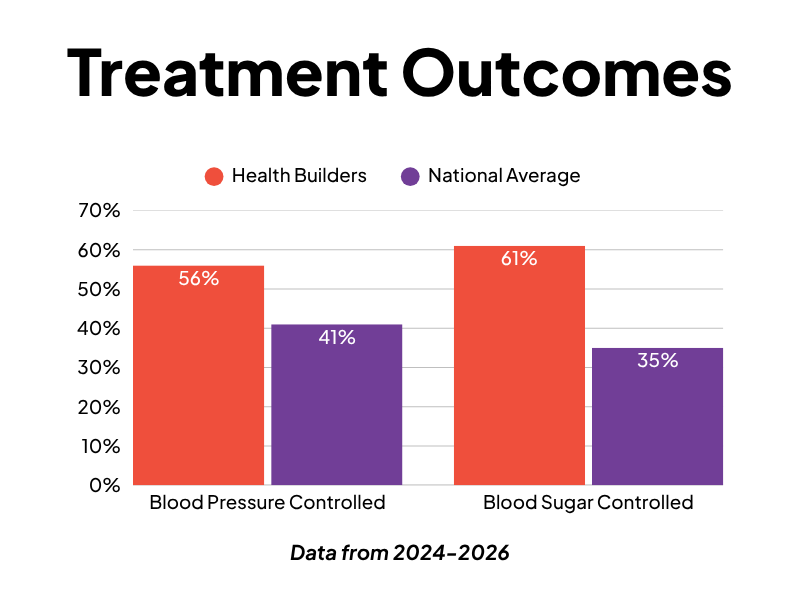
Our current reporting shows that our hypertension and diabetes treatment outcomes are outpacing national averages, but screening and referral are only the first steps. True impact comes from ensuring that patients receive quality care and stay healthy over time.
Among patients enrolled in care through Health Builders' supported facilities:
56% have their blood pressure under control, compared to the national average of 41%
61% have controlled blood sugar, nearly double the national average of 35%
These results demonstrate that when health systems are strengthened with the right training, tools, and follow-up systems, patients don't just get diagnosed, they get better.
Our Path Forward: Three Interconnected Pillars
But no single intervention can address the growing burden of NCDs. Building an effective response requires connected efforts across every level of the health system.
At Health Builders, our work is guided by three interconnected pillars:
Access: Ensuring people can receive prevention, screening, diagnosis, and treatment closer to where they live.
Quality: Equipping healthcare workers with the knowledge, tools, and data systems needed to deliver high-quality care.
Sustainability: Strengthening government systems and local capacity so improvements continue long after individual projects end.
Together, these pillars help create a health system that is better equipped to respond not only to today's growing burden of chronic disease, but also to Rwanda's future health needs.
We will be taking a closer look at each of these pillars, starting with Access, and how community health workers, digital tools, and stronger primary healthcare are bringing NCD prevention and care closer to the people who need it most.
Learn more about our work, and follow us on Facebook for updates on how we're building a healthier Rwanda one community at a time.